
Choosing childcare for a child with additional needs
By Marcus Quinn · Updated 2026-07-16
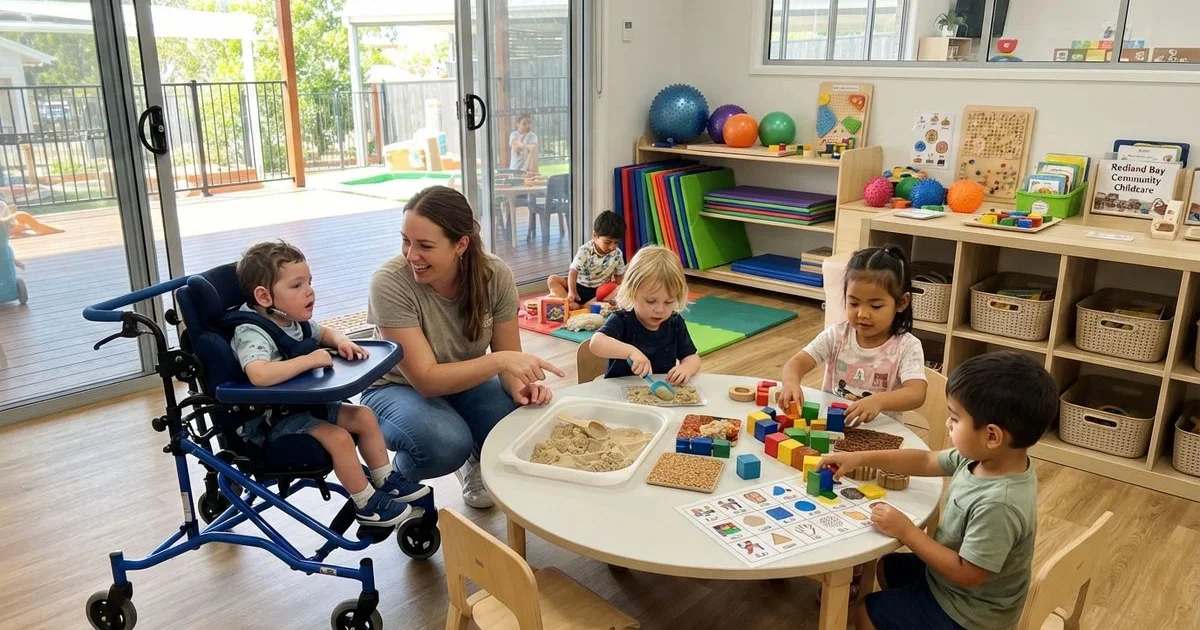
This is general information to help guide your search, not medical, therapeutic or legal advice; a paediatrician, therapist or support coordinator is the right source for guidance specific to your child.
Finding the right fit matters for every family, but the stakes feel higher when a child has additional needs and the wrong environment can mean real setbacks rather than just an adjustment period. The good news is that most of what separates a genuinely inclusive centre from one that only says the right things comes down to a short list of specific, answerable questions.
Redland Bay families can start by browsing inclusion and additional needs support listings, then use the questions below to work through each option in more depth.
What genuine inclusion looks like in practice
Reviewing feedback from families across the centres we track, a consistent pattern shows up: centres that talk about inclusion in general terms on their website do not always deliver it day to day, and the gap tends to show up around communication and follow-through rather than intent. Families with children who have additional needs report the strongest experiences with centres that communicate specifically and proactively, not just when something goes wrong.
Questions to ask before you enrol
- Staff experience. Have educators supported a child with a similar need before, and what did that look like in practice?
- Funding and support. Has the centre applied for inclusion support funding before, and do they understand the process?
- Individual planning. Will your child have an individual learning plan, who is involved in creating it, and how often is it reviewed?
- Communication. How often will you hear specifics about your child’s day, not just a general “they had a good day”?
- Physical environment. Are there quiet spaces, sensory considerations, or physical accessibility features relevant to your child’s needs?
Disclosing early
Telling a centre about your child’s needs before you enrol, rather than after, gives them time to plan, apply for support funding if needed, and think through staffing. A centre that responds to early disclosure with specific, thoughtful questions rather than a generic “we welcome all children” is usually showing you how they will actually operate once your child is there.
| Sign of a strong fit | Sign to look closer |
|---|---|
| Specific staff training mentioned by name | Vague claims about being “inclusive” with no detail |
| Individual learning plan process explained clearly | No clear answer on how a plan would be created |
| Regular, specific updates offered as standard | Communication only happens when you chase it |
| Willingness to discuss funding and support options | Reluctance to discuss inclusion support funding |
Support and funding worth knowing about
Inclusion support funding exists specifically to help centres adjust staffing ratios or bring in additional resources for a child with additional needs. It is applied for by the centre, not the family, so a centre’s familiarity with the process is itself a useful signal. If a centre has never applied for it, that is not necessarily disqualifying, but it is worth asking how they plan to approach it if your child needs that support.
Working with outside specialists
Many children with additional needs already see a therapist, paediatrician or support coordinator before starting care, and a strong centre will actively coordinate with that team rather than working in isolation. Ask whether educators are willing to communicate directly with your child’s therapist, incorporate strategies from an existing plan, or accommodate visits from a specialist during the day if that is part of your child’s support. A centre that treats outside professionals as a resource, rather than an inconvenience to schedule around, tends to deliver more consistent support day to day.
A gradual start, done deliberately
A longer, more deliberate settling-in period is often worth asking for specifically, rather than assuming the standard visit or two will be enough. For some children, several shorter visits spread over a few weeks, with the same one or two educators present each time, build familiarity in a way that a single longer visit does not. Ask the centre whether they are willing to build a settling-in plan around your child’s specific needs, rather than applying their standard process by default.
Trust your own observations
Beyond the questions above, a visit tells you things a conversation cannot. Watch how staff talk to children generally, not just about your child specifically. Notice whether the environment feels calm and manageable or chaotic and overstretched. Complaint themes we see repeated across the sector, such as poor support for additional needs or communication gaps at key moments, tend to trace back to centres that were stretched too thin rather than centres with bad intentions.
Our ranking methodology explains how we weigh communication and follow-through in our scoring, which are the same qualities worth testing for here. You can also return to the homepage to compare inclusion-focused options across Redland Bay.
Common questions
- What is inclusion support and how do I access it?
- Inclusion support is federal funding that helps centres adjust staffing or resources for a child with additional needs. A centre applies for it, so ask directly whether they have experience doing this.
- Should I disclose my child's needs before enrolling or after?
- Disclosing early, ideally before you enrol, gives a centre time to plan and apply for any support funding. Centres that respond well to early disclosure with specific questions are usually a good sign.
- What does an individual learning plan actually involve?
- It is a documented plan created with educators, and often a specialist or therapist, that sets goals and strategies for your child. Ask how often it is reviewed and updated.
- What if a centre says it can support my child but I am not confident that is true?
- Ask for specifics: which staff have relevant training, how they have supported similar needs before, and what a typical day would look like for your child. Vague reassurance without detail is worth questioning.